KEY HIGHLIGHTS
- 8th Pay Commission demands to be discussed at NC-JCM meeting on 25 February 2026 in Delhi.
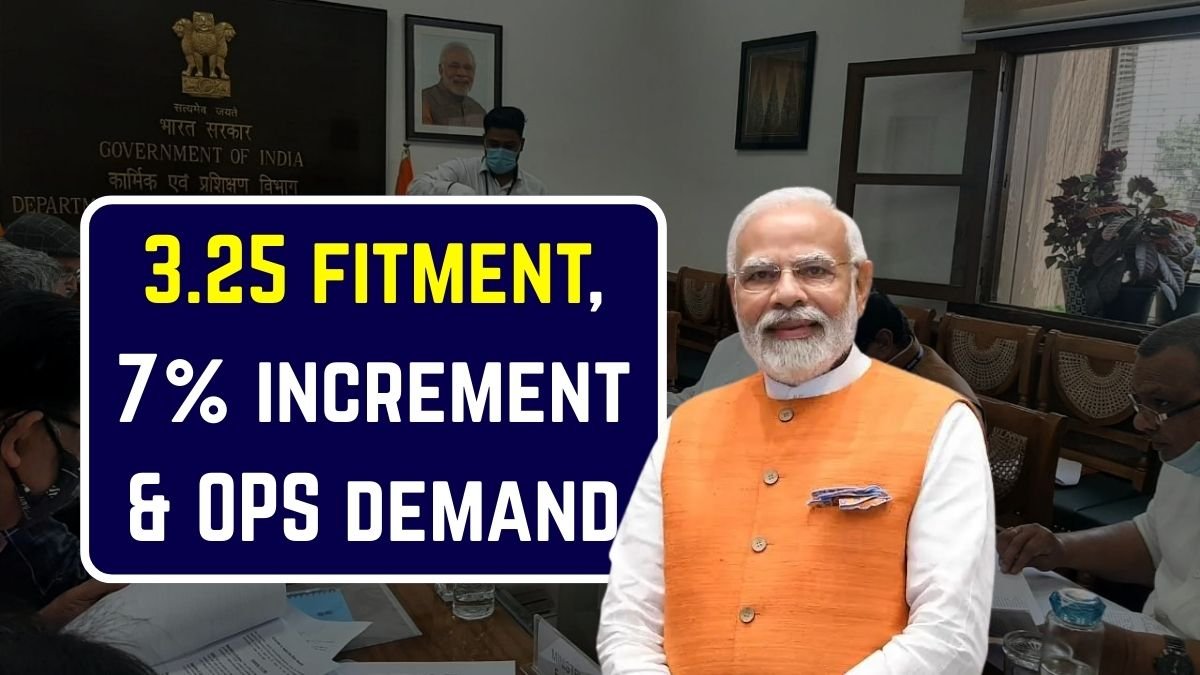
- Key proposals include 3.25 fitment factor, 7% annual increment, and restoration of Old Pension Scheme (OPS).
- Central employees and pensioners should monitor official updates and avoid relying on unverified social media claims.
Central government employees and pensioners are closely tracking developments related to the 8th Pay Commission. A crucial meeting of the National Council (Staff Side) JCM (NC-JCM) is scheduled in New Delhi on 25 February 2026, where employee representatives will formally present their demands.
The drafting committee, headed by Shiv Gopal Mishra, is expected to finalise recommendations before submitting them to the Commission’s chairperson, Justice Ranjana Prakash Desai.
| Event/Category | Details/Dates |
|---|---|
| Organization | National Council (Staff Side) JCM |
| Meeting Date | 25 February 2026 |
| Location | New Delhi |
| Commission Chairperson | Justice Ranjana Prakash Desai |
| Official Update | Available Here |
Why This Meeting Is Important
Pay Commissions directly impact the basic salary, allowances, pension benefits, and retirement benefits of nearly 50 lakh central government employees and over 60 lakh pensioners across India.
Any change in the fitment factor or increment rate can significantly increase take-home salary and retirement corpus. That is why the upcoming discussions are being closely watched.
Major Salary-Related Demands
1. Fitment Factor Increase to 3.25
Employee unions are demanding that the fitment factor under the 8th Pay Commission be fixed between 3.0 to 3.25, instead of lower projections.
- A fitment factor of 3.25 could substantially raise the minimum basic pay.
- Some leaders claim that if the “family unit” norm increases from 3 to 5 members, it may justify a 66% rise in basic salary, citing inflation and higher living costs.
2. Annual Increment Raised to 7%
Current annual increment: 3%

Proposed changes:
- Increase annual increment to 7%, OR
- Provide increment every six months
This would significantly impact long-term salary growth.
3. Leave Encashment Enhancement
- Current limit: 300 days
- Proposed limit: 400 days at retirement
This change would benefit employees nearing superannuation.
Promotion & LTC Reforms
Employee bodies are also pushing for structural reforms:
- Uniform and transparent promotion policy across all departments
- At least 5 guaranteed promotions in 30 years of service
- Option to encash Leave Travel Concession (LTC) in cash
Many departments reportedly see long stagnation periods of 10–15 years without promotion, while others have faster progression. Unions argue this creates disparity.
Pension & Allowance Demands
Restoration of Old Pension Scheme (OPS)
Defence personnel and several employee groups have demanded:

- Scrapping of NPS and UPS
- Restoration of Old Pension Scheme (OPS)
This remains one of the most politically sensitive issues.
Other Key Proposals
- 10% additional element for technical posts
- Children’s Education Allowance extended up to postgraduate and professional courses
- Fixed Medical Allowance increase from ₹1,000 to ₹20,000 per month in areas without CGHS facilities
- Increase in family unit calculation from 3 to 5 members
Department of Posts Recommendations
The Federation of National Postal Organisations (FNPO) has proposed:
- Multi-level fitment factor: 3.0 to 3.25
- 5% annual increment
- Retention of the 7th Pay Commission pay matrix structure
- Salary structure aligned with private sector benchmarks
Who Will Be Affected?
If implemented, the 8th Pay Commission recommendations will apply to:
- Central Government employees
- Defence personnel
- Railway employees
- Central autonomous bodies (subject to approval)
- Central government pensioners and family pensioners
State government employees are not automatically covered, unless their respective state governments adopt similar revisions.
Selection & Implementation Process
The process generally involves:
- Submission of demands by employee bodies
- Internal review and deliberation by the Commission
- Report submission to the Central Government
- Cabinet approval
- Official notification and implementation
Implementation may be retrospective or prospective, depending on government decision.

Important Note (Editor’s Tip)
Do not assume that every demand will be accepted. Historically, Pay Commissions revise and rationalise proposals before finalising them.
Avoid depending on viral social media figures claiming “confirmed salary increases.” Wait for official notification. Also, keep your service records and promotion details updated — discrepancies can affect pay fixation later.
What Should Employees Do Now?
- Track official updates from the Department of Personnel & Training (DoPT).
- Keep service records, increment history, and pension papers updated.
- Pensioners should ensure bank and PPO details are correct.
- Do not fall for unofficial calculators circulating online.
FAQs on 8th Pay Commission
1. When will the 8th Pay Commission be implemented?
As of now, discussions are ongoing. The meeting on 25 February 2026 is a preparatory stage. Final implementation depends on government approval.
2. Will the Old Pension Scheme definitely be restored?
There is a demand to restore OPS, but no official confirmation has been issued. The final decision rests with the Central Government.
3. How much salary increase can employees expect?
The exact increase depends on the approved fitment factor and increment structure. If a 3.25 fitment factor is approved, the rise in basic pay could be significant, but final figures are yet to be declared.
 Join
Join